On 24 June 2024, I set out from Phillaur with my family on a road trip to Eastern Ladakh. The plan was to drive from Phillaur to Srinagar, cross Zoji La to Kargil, through the Aryan Valley to Leh, onward to Hanle and back home via Jispa and Gumbok Rangan (Gonbo Rangjon).
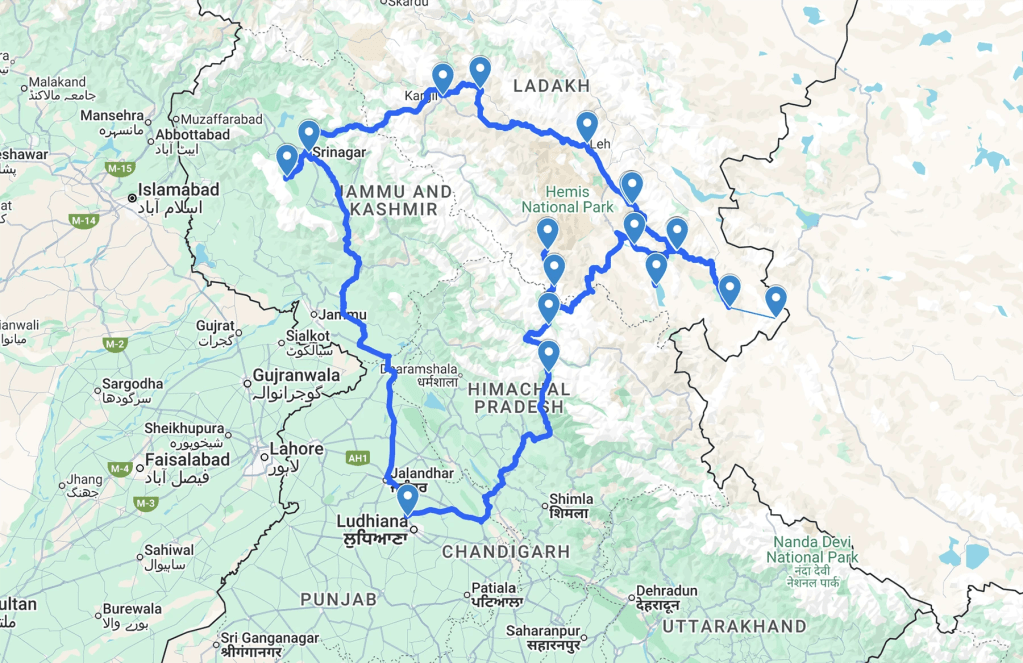
Similar to our previous Kashmir trip, the plan for day 1 was to spend the night at Patnitop, and drive to Srinagar the following day. We left before dawn and were able to skip the notorious traffic jams at Jammu city. With ample daylight to spare, we decided to skip the halt at Patnitop and drove straight to Srinagar. After spending a lovely evening at Boulevard Road, we returned to the hotel for the night.
The next day was our cleanup run. We planned to cover everything we missed on our last Kashmir trip due to COVID. This included Doodhpathri, Nishat Bagh and Shalimar Bagh. Tired from yesterday’s long drive, we woke up late in the morning and left for Doodhpathri in the afternoon.
Since the past few days, there had been reports of Tawny Owls from the area, so we decided to take a small detour and check them out. I messaged Ansar Ahmad Bhat, an excellent bird guide and friend from my last trip to the valley, for the spots. He pointed us to a spot near Pulwama where he had seen a pair. We drove out in the early afternoon hours and scanned the mighty chinar trees for any signs of the owl, but in vain. Because of the limited time that we had planned to be in the valley, we had to call off the search after about an hour and a half and head to Doodhpathri. Later that day, Ansar came to checkout the location and found out that the Owls had shifted a few kilometers deeper into the chinar forest.

Doodhpathri
About Doodhpathri
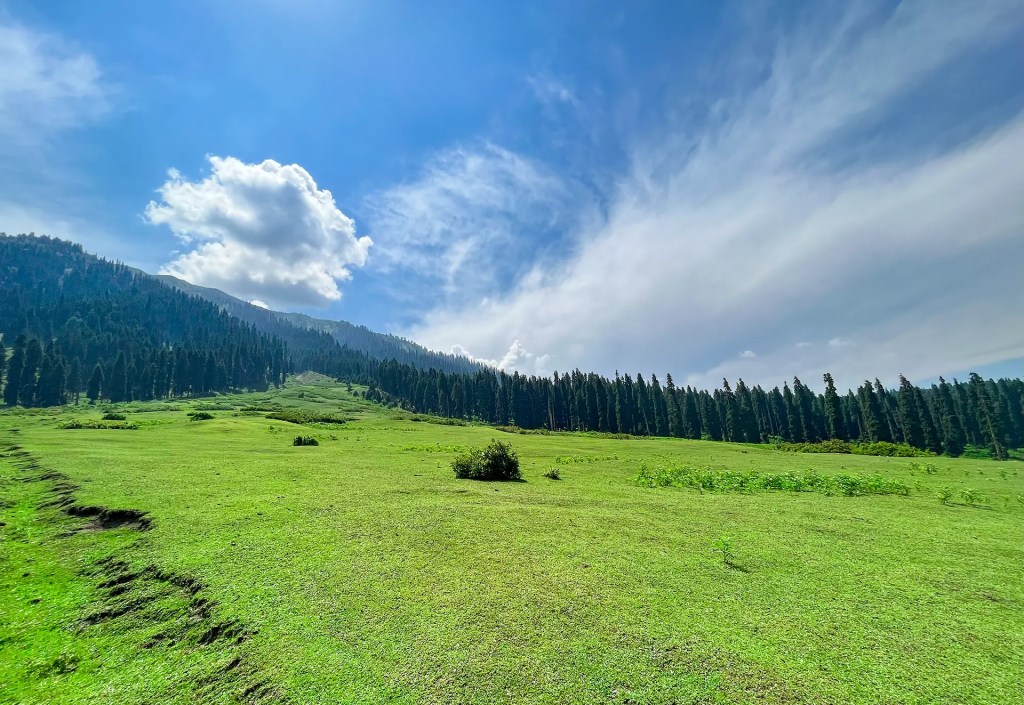
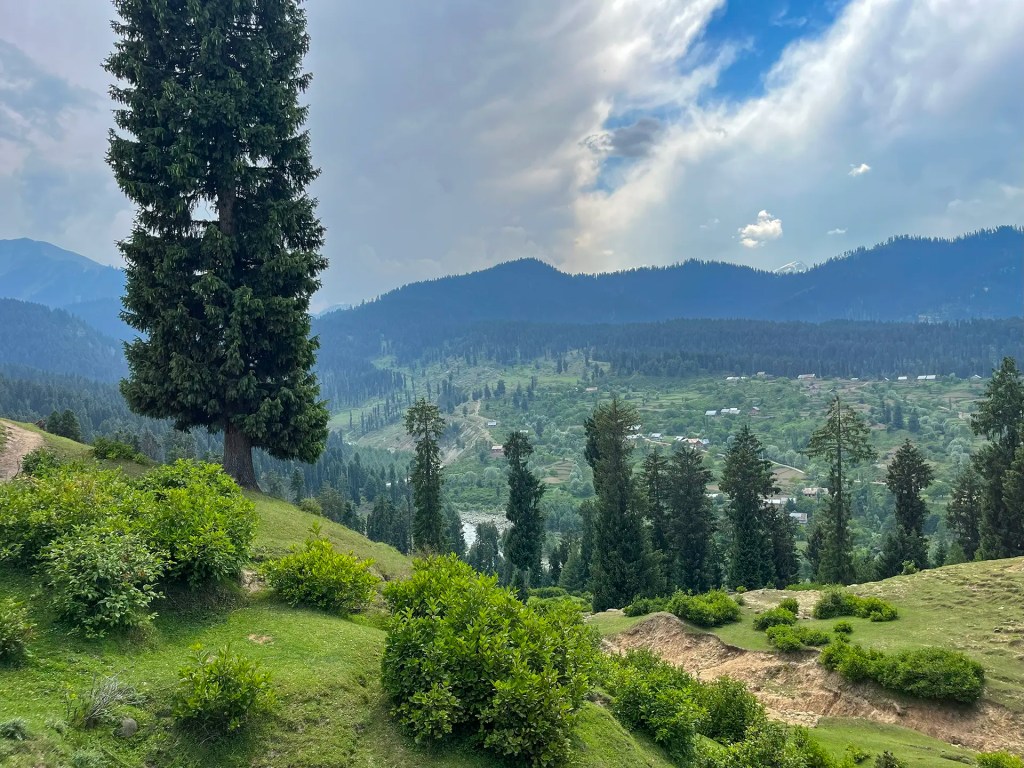
Doodhpathri is a high-elevation meadow in Budgam district, about 42 km from Srinagar. It sits at roughly 2,730 meters and forms part of the Pir Panjal range. The name means “Valley of Milk,” a reference to the milky appearance of the Shaliganga stream that flows through it. The area has no permanent settlements and serves as a seasonal grazing ground for shepherds. Its open grasslands, cold river, and surrounding mountains make Doodhpathri a popular spot for visitors who want a quiet landscape away from Srinagar’s busy areas.
Habitat & Species
The valley is bordered by dense stands of West Himalayan fir and Deodar. These forests hold species that birders often seek in Kashmir, including Kashmir Nuthatch and Kashmir Nutcracker. Smaller birds such as Coal Tit, Rufous-naped Tit, and several leaf warblers use the upper canopy and understory. The open meadows and river edges can reveal doves, wagtails, and other ground feeders. The habitat mix—fir forest, river, and grassland—makes the area productive even during short stops.
We reached Doodhpathri by about 1.30 in the afternoon, and were awestruck by the beautiful landscapes there. I immediately noticed a stunning forest of West Himalayan fir (Abies pindrow) trees near the parking. The fir forests around Doodhpathri and Yousmarg are popular among birdwatchers for hosting the Kashmir Nuthatch and the Kashmir Nutcracker. So, I went straight in, hoping to find these star species of Kashmir. The forest was full of activity and my hopes of finding these were high. I scanned the long fir trees in hopes of catching a glimpse of a Nuthatch hopping around the tree trunks, but after about half an hour there was no sign of either of the two targets.
I gave up the search and began focusing on other avian species in the area. A Coal Tit was feeding in the fir trees and the melodious song of a Rufous-naped Tit filled the forest. While photographing the Coal Tit, I saw commotion in the bushes, some distance away from me. I slowly moved to a better location to observe and realized that it was two Warblers fighting, but since both of them kept moving so quickly I was not able to confidently identify the two birds.
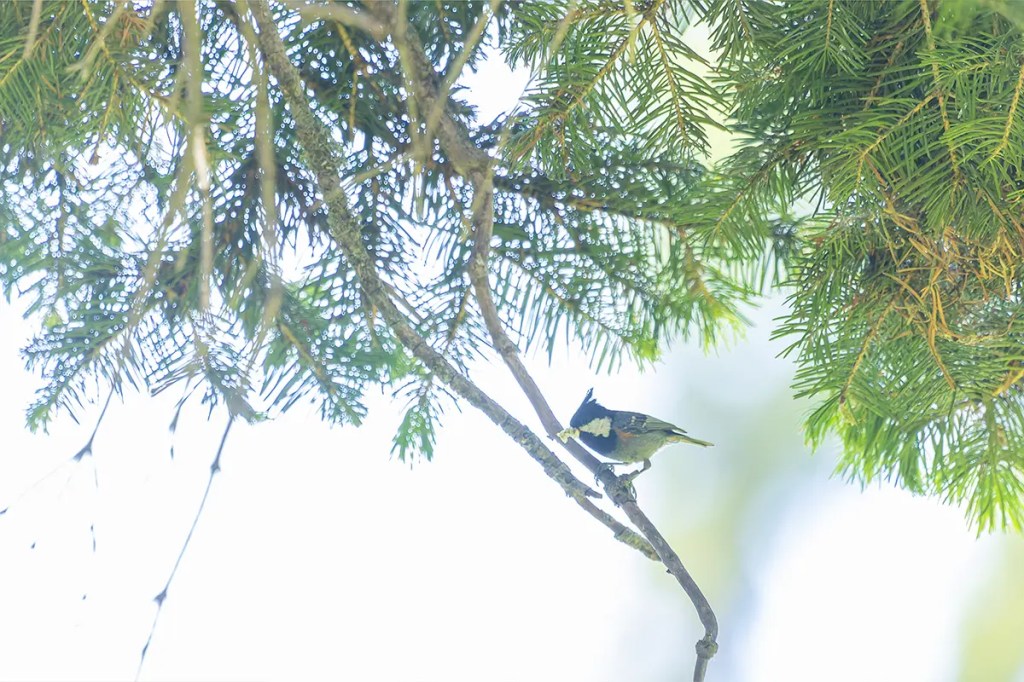
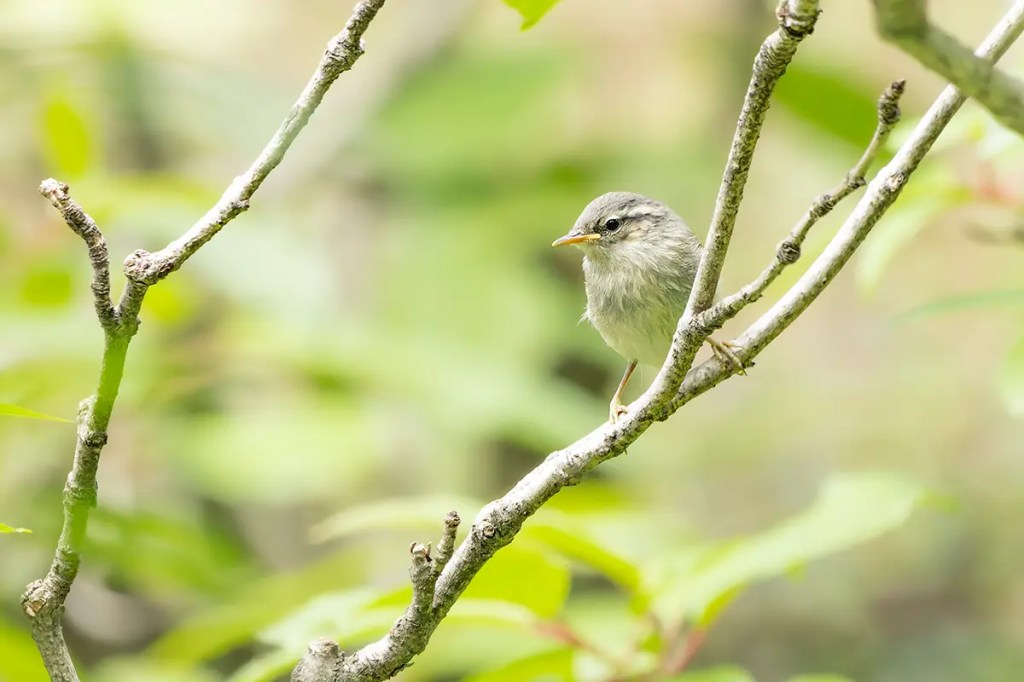
After a few minutes, the bird being chased perched on an open perch for a few seconds. I immediately took a few photos and found that it was a rare Tytler’s Leaf Warbler! Soon the bird chasing it gave up and sat in the fir trees near me. I was finally able to photograph it and it was a common Western Crowned Warbler.

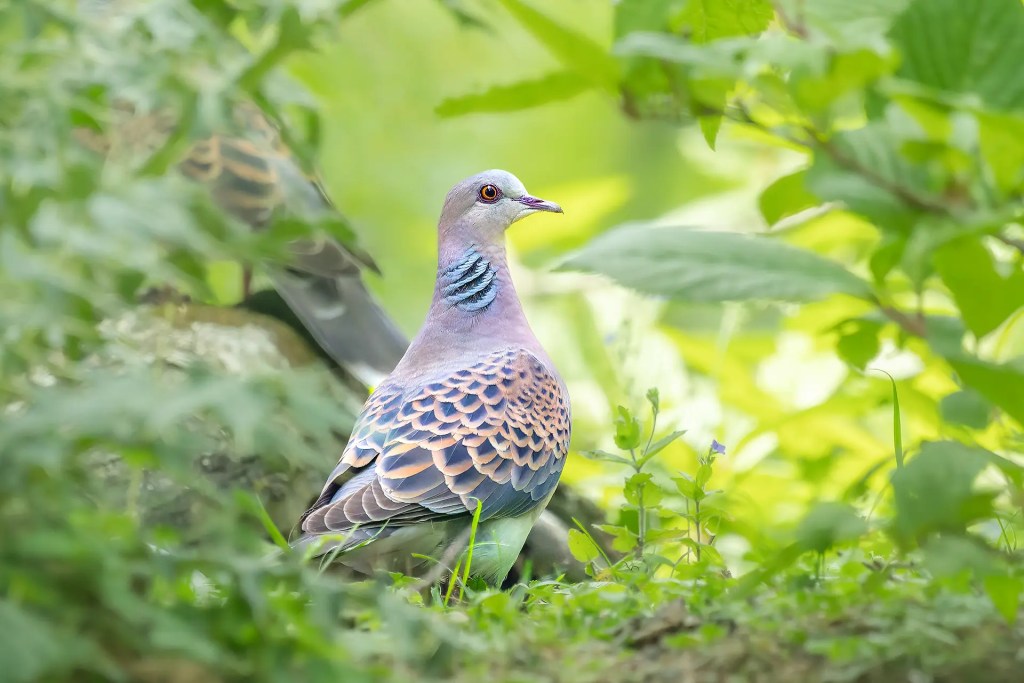
The Tytler’s Leaf Warbler had food in mouth that the Western Crowned Warbler was trying to steal. Once the Western Crowned Warbler went away, the Tytler’s Leaf Warbler, flew into the bushes where I followed it and found a cute little Tytler’s Leaf Warbler fledgling! I took a few shots and left immediately to avoid disturbing the bird any further. On the way back I found a beautiful pair of Oriental Turtle Doves foraging on the ground.
After that it was time for me leave and join my family in the gorgeous Doodhpathri meadows. The wide green stretches of grass and the tall mountains lined with fir forests in the background took my breath away.
Nishat Bagh
About Nishat Bagh
Nishat Bagh is a terraced Mughal garden built in 1633 on the eastern edge of Srinagar. It rises in steps from the shore of Dal Lake toward the lower slopes of the Zabarwan mountains. The garden follows a straight central water channel, with lawns, fountains, and lines of chinar trees along each terrace. Its design focuses on symmetry and views: the terraces frame Dal Lake below, and the mountains form a backdrop above.
Habitat & Species
Inside the garden, birdlife is typical of an urban green space. Jackdaws, mynas, crows, and other city species perch on the chinar branches and feed on the lawns. Outside the main gate, Dal Lake has various herons, egrets, kingfishers, and, with luck, Little Bitterns in the reed beds. Behind the garden, the lower Zabarwan slopes hold more diverse species, including White-capped Bunting, European Bee-eater, migrant flycatchers, and various redstarts.
We took in the views for little while longer and began packing up to leave for the Mughal Gardens of Srinagar. We reached Nishat Bagh by evening and were met by a big evening crowd. The place was bustling with activity and so we decided not to spend too much time there and move on to Shalimar Bagh instead.


Shalimar Bagh
About Shalimar Bagh
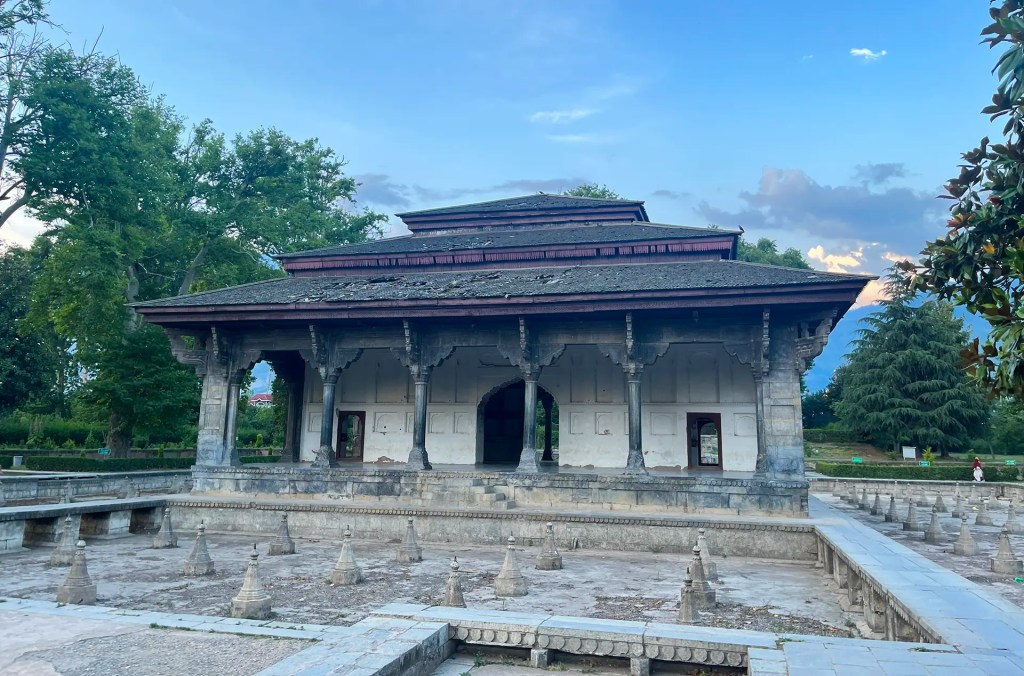
Shalimar Bagh was built by Emperor Jahangir in 1619 as a royal garden overlooking Dal Lake. It is the largest of the Mughal gardens in Srinagar. Its layout uses long axial water channels, stone pavilions, and large chinar trees to create shade and guide movement through the garden. The design emphasizes more on slow walking paths and views toward the terraces and lake rather than wide open lawns.
Habitat & Species
The garden supports fewer wild species than Doodhpathri or the Zabarwan slopes. The habitat is mainly lawns and rows of chinar and ornamental trees. Jackdaws, crows, and mynas are most common, using the large chinars for perching. The garden works more as a resting point for urban birds rather than a birding site, and the more interesting species like Common Cuckoos are usually found outside its boundaries rather than inside.
Because of the evening rush we reached Shalimar Bagh just a couple of minutes before closing time. Contrary to Nishant Bagh, Shalimar Bagh was relatively much quieter and we ended the day walking among the beautiful Mughal architecture and old chinar trees.

~Arjun Basandrai

 Birding With Arjun
Leave a comment